


Get the invite list wrong and the best facilitation in the world cannot save the session. Too few voices and you miss what is really happening in the business. Too many and you get a town hall that decides nothing. The right answer is smaller and more deliberate than most companies assume.
The core team makes the decisions
Strategic decisions belong to the senior leaders accountable for delivering them, usually the CEO and the direct reports who own major functions. This is the group of five to eight people who will live with the plan and be measured against it. Keep that decision-making group tight.
Bring in other voices as input, not as voters
The people closest to customers and operations often see things the executive team cannot. Pull them in through interviews, surveys, or a working session ahead of the offsite. They inform the decisions without diluting the room where the decisions get made. Those two roles are genuinely different, and blurring them is how planning sessions balloon.
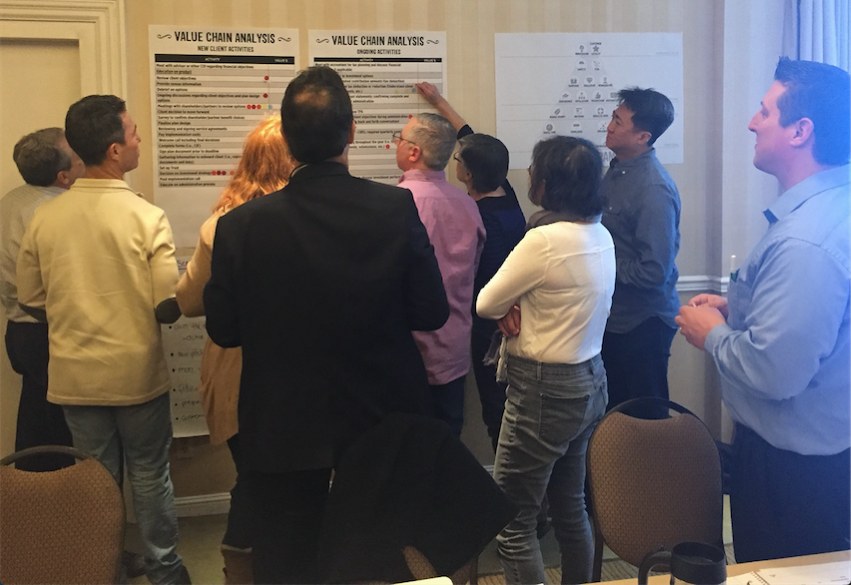
Consider a neutral facilitator
The CEO cannot both run the room and advocate for a position, and when the boss is facilitating, candor tends to evaporate. A neutral facilitator keeps the conversation honest, makes sure the quiet expert gets heard over the loudest voice, and lets the leadership team participate as peers. This is one of the few places an outside party reliably earns the cost.
Decide how the board plugs in
For companies with a board or outside investors, settle early how they participate. Usually they weigh in on direction before planning and approve the plan afterward, rather than sitting in the working sessions. Clarity on that up front prevents an awkward rewrite later.
How Optimize helps
Part of our job is designing the room, deciding who makes the call and who informs it. As a neutral facilitator, we let the CEO participate as a peer and make sure the plan reflects the whole business, not just the loudest voice in it.
Bottom line
Build the room around a tight decision-making core, feed it with voices from across the business, and keep the two roles distinct. That single choice shapes the quality of everything that follows.
Part of the strategic planning series. Start with What Does a Strategic Planning Process Actually Look Like?